
Weekly transition round up
18 May 2026

Each week I’ll try to get a round-up of some of the pieces I’ve been reading over the past week that shape my understanding of the transition (for better or worse). I’m trying to keep it to 3-4 max. If there’s something I should have read let me know!
Helter Smelter
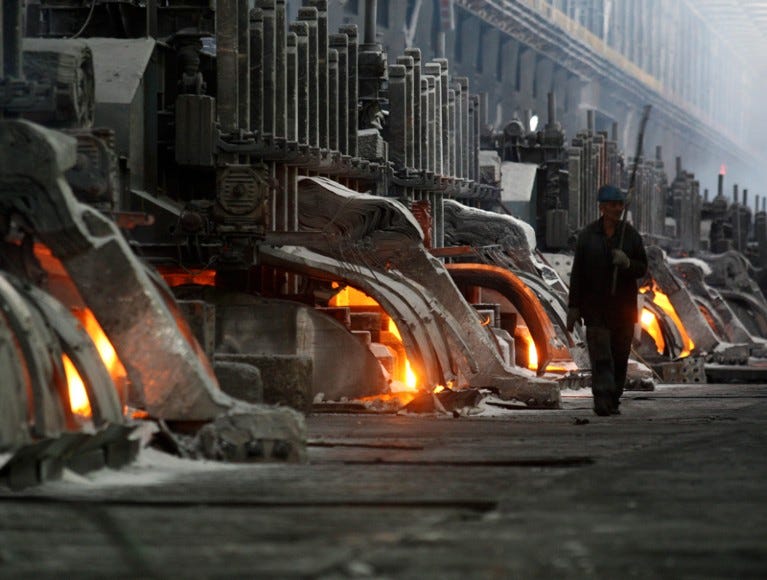
Aluminium is one of the most carbon intense materials we use. Around 16 tonnes of CO2e are produced per tonne of aluminium, and global aluminium production is responsible for around 4% of all emissions. Most of the emissions come from the smelting process.
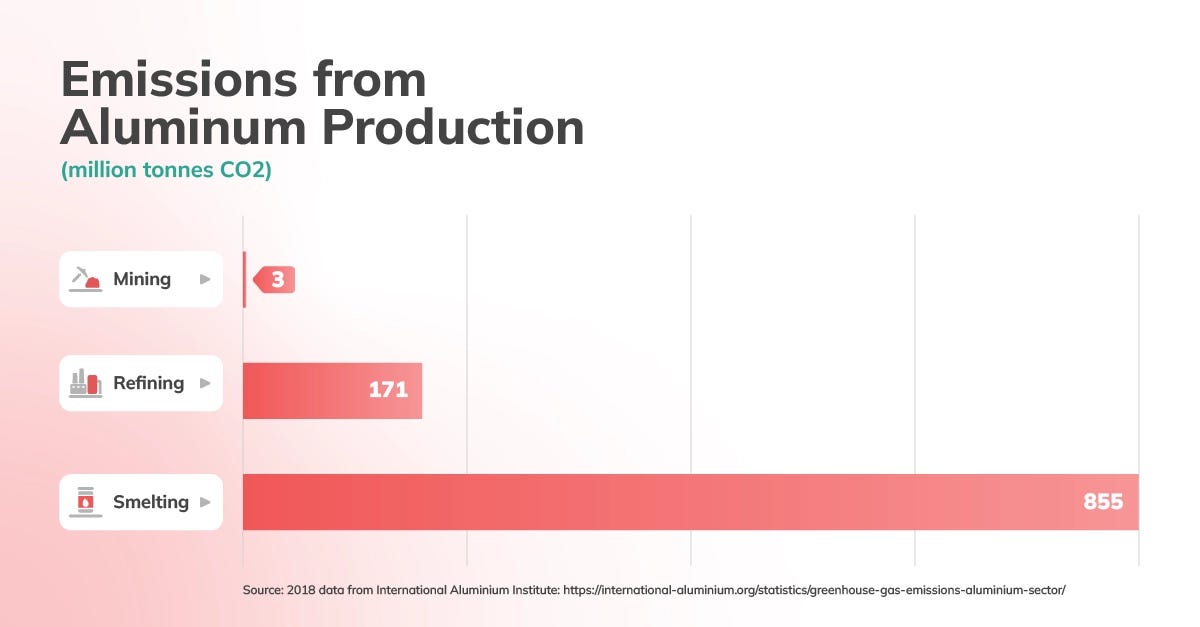
Smelting produces such high emissions as its an incredibly energy intensive process - one of the reasons there is such significant smelting capacity in the Gulf States (9% of global capacity). China, of course, is the dominate player with around 60% of global capacity.
Smelting takes place using electrolysis, and it uses about five times the annual energy use of a UK household to produce just one tonne of aluminium.
As with steel and concrete, its often been labelled a hard to abate. Not because we lack the technology, but because it makes it more expensive. And if its more expensive, everything from houses to tins of beans to aircraft to laptops gets (marginally) more expensive.
So its huge news that China is rapidly shifting aluminium production to regions with high renewable energy output. Especially with Gulf production stuck behind the Straights of Hormuz, driving up global prices.
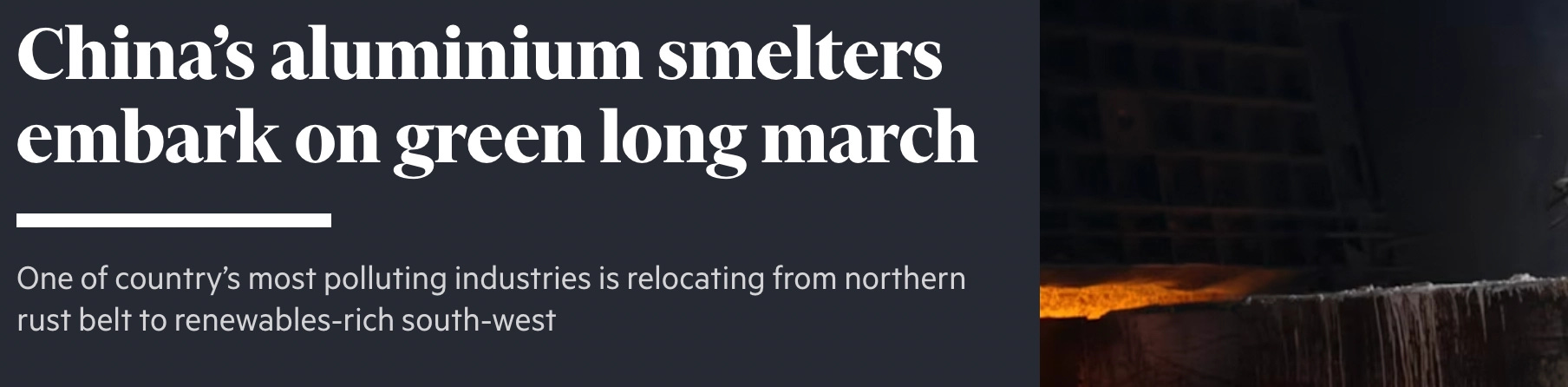
Thirty percent of China’s aluminium output now comes from regions with high renewable energy generation. The process of relocation is taking place within a system of production caps to stop over-production, and with a series of incentives and directives towards ‘greening’ the smelting process.
Last year, aluminum became the first energy-intensive industrial sector subject to a new renewable power mandate requiring green electricity to supply 70% of smelters’ electrons, up from just over 25%.
- China could be on the cusp of a green aluminum boom
This means companies have been decommissioning plants in the north and building new ones elsewhere - largely Yunnan, Sichuan, Xinjiang and Inner Mongolia. While this is good carbon news, it does mean the process of deindustrialisation in the “northern rust-belt” is accelerating, driven by green transition policies (sound familiar?)
Industrial competition is shifting from a battle of scale and cost to a comprehensive contest of ‘green’ and ‘low-carbon’ advantages.
China is also investing heavily in aluminium recycling (going circular in its production), as recycling produces typically 80% fewer emissions.
This process is also taking place in the context of Europe’s carbon border mechanism - an example of the EU effect in action (REACH being the other quasi-famous example).
Already China is looking to expand the geographical footprint of its aluminium industrial ecosystem (something the West does not have) to other countries such as Vietnam and Indonesia.
And aluminium is just the pilot.
Last summer, a Chinese steelmaker scheduled its debut shipment of green steel to a buyer in Italy, carving out the start of a supply chain that would comply with the EU’s carbon tariff. In November, top steel trade associations in Europe and China agreed to work together to create uniform standards for what qualifies as green.
Climate rents
Saying Australia has a lack of affordable housing is a profound understatement. Average house prices hit Aust$1 million recently (over half a million pounds - almost double the UK average), while rents typically take up a third of most people’s incomes.
So a report from University of Sydney researchers is unwelcome news.
Australia’s housing affordability expected to worsen and homelessness soar under fossil-fuelled future. Rents will rise and homelessness quadruple in a decade unless serious steps to cut emissions are taken
The report modelled most of the key factors that shape affordability, moving away from simple inflation-input approaches. They brought together income date, mortgage rates and insurance premiums, as well as available land and demographic changes.
While rents and costs increased across the board, low income households were hardest hit, contributing to a possible four fold increase in homelessness in the next ten years.
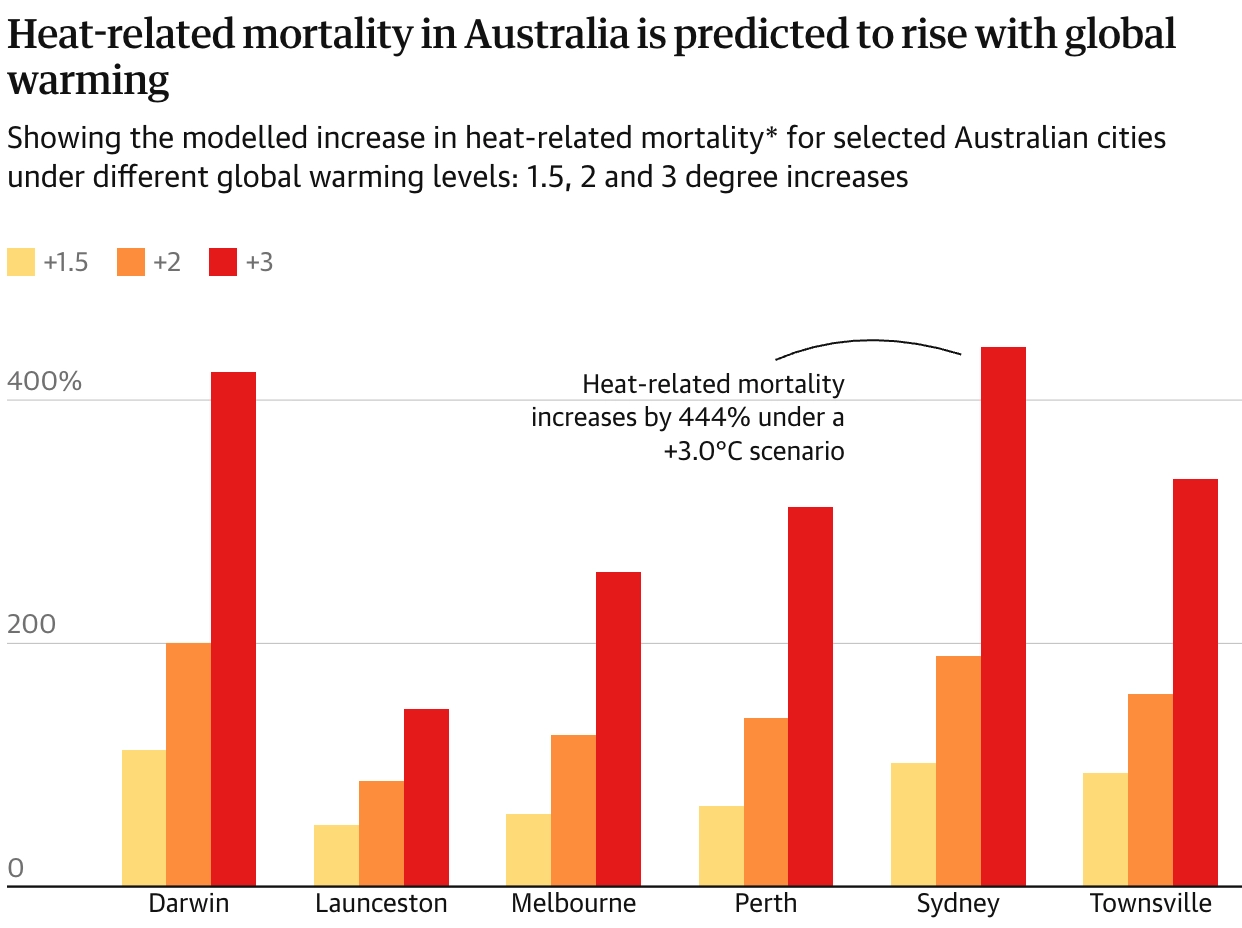
This comes after the national government’s climate risk assessment found 10% of households will be in areas of very high risk in the next five years. Thats on top of heat related illness and death, and coastal inundation from sea level rise. Just sea level rise puts 1.5 million coastal residents at risk by 2050.
New EV car factory, old abusive processes
A few weeks ago I wrote up a long piece on Europe’s car industry, on the challenges it faced and the likely path forward:
What this means for Europe is car makers are in full desperation mode as they scramble to find ways to not just retain some market share but find uses for their fixed assets at all. The story of VW pivoting to drone production for Israel is one for the history books, but the stories of Nissan and Stellantis set out the more likely path this will all take.
So the news this week that “Stellantis has finalised a €1bn deal with Chinese state-owned Dongfeng to produce Peugeot and Jeep vehicles in China” wasn’t surprising. The plan is to produce for the local Chinese market and also for export, presumably into the Asia-Pacific region using the lower production costs and industrial ecosystem in China. EV sales in the Asia-Pacific are predicted to grow at 18% year, and China has 60% of that market share.
As I set out in the previous stack on Europe’s car production, there is a flurry of negotiations underway to get China to invest in new car factories in Europe, and to take up the spare capacity in existing plants such as Nissan’s Sunderland plant (though Chinese companies are wary of doing the latter due to fears of industrial IP theft and lack of total plant control)
But the experience of BYD in Hungary is a warning of what that would mean in practice. Viktor Orbán, the now ex-president of Hungary, actively courted China to attract investment and secure Chinese factories within Hungary. This has been a success, and since 2024 there have been a series of announced investments from solar to cars to batteries, totally half of all of Hungary’s FDI.
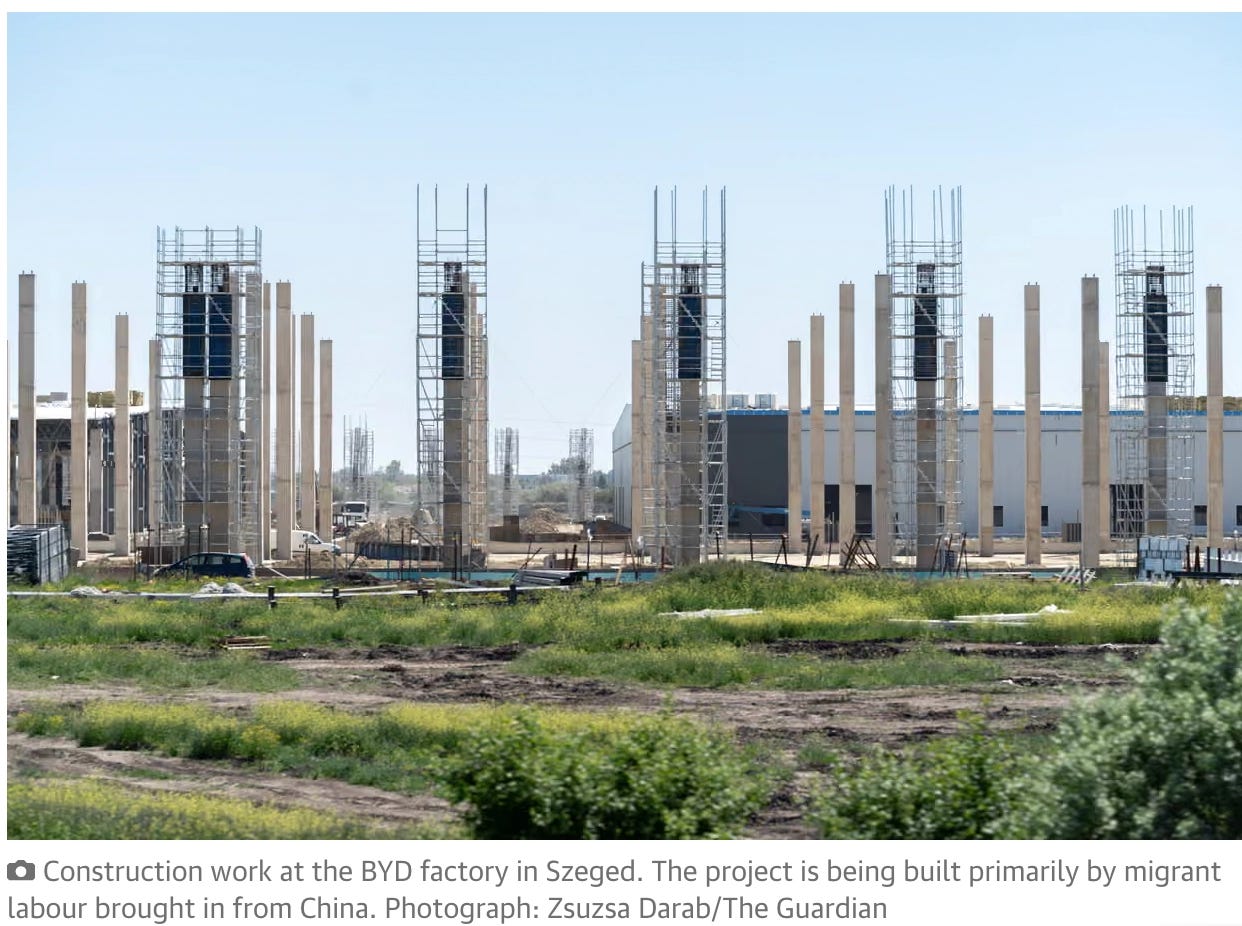
BYD are building a car factory in Szeged, south of Budapest, and unsurprisingly:
A New York rights organisation, China Labor Watch (CLW), interviewed more than 50 migrant workers who point to a series of potential violations of EU labour laws, including incidences of seven-day working weeks, recruitment-related debt, excessive overtime and visa breaches among Chinese workers hired through subcontractors.
These working conditions are not unusual for Chinese workers, any more than they are for migrant workers in Europe.
Asked what conditions are like inside the site, a colleague replies: “Nothing out of the ordinary, when you’re a migrant worker.” His supervisors are very strict and living conditions are “quite harsh”, he says.
There has been one reported death at the construction site, and several unconfirmed cases of tuberculosis.
The plant will eventually have 10,000 workers, presumably most locals, although the ‘made in Europe’ law only requires that 50% are from Europe, but the model of using Chinese construction labour is one being used elsewhere in Europe:
In the Spanish city of Zaragoza, CATL, in a joint venture with the multinational carmaker Stellantis, has already clashed with local leaders over plans to deploy 2,000 Chinese workers to build the factory.
Meet the new industrial overlords, same as the old ones.